
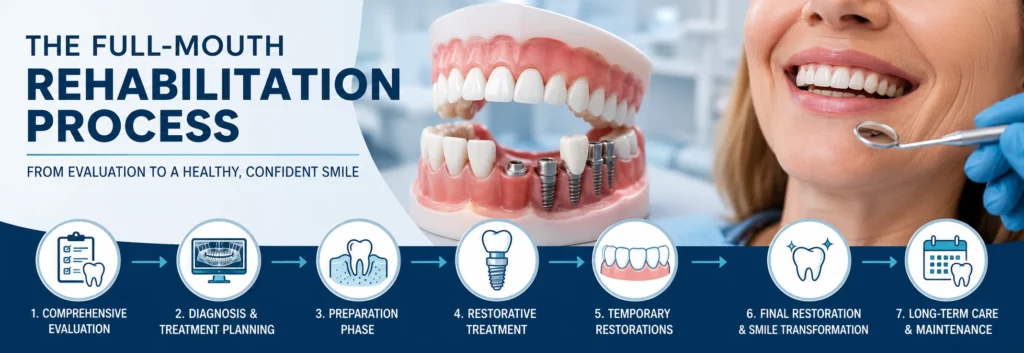
What Does the Full-Mouth Rehabilitation Process Involve Start to Finish?
Rebuilding an entire mouth sounds like a huge undertaking, and honestly, it kind of is. But when someone is dealing with years of worn teeth, missing teeth, or a bite that is completely out of balance, piecing things back together one procedure at a time rarely gets the job done the right way.
Who Actually Needs This Level Of Care
This kind of treatment is not for someone who just needs a filling or a single crown. It is meant for people dealing with widespread damage, whether that is from years of grinding, untreated decay, old dental work that has failed, or trauma that affected several teeth at once.
Full-Mouth Rehabilitation looks at the entire mouth as one connected system rather than treating each tooth as its own separate problem. That shift in approach changes almost everything about how treatment gets planned. Patients who have been through multiple failed treatments elsewhere often find that the difference here is the willingness to zoom out and look at the whole picture instead of chasing one symptom at a time.
The First Step Is A Deep Evaluation
Before any actual work begins, there is a lengthy evaluation phase. This usually includes digital scans, X-rays, photos, and a detailed look at how the jaw moves and how the teeth come together when biting down.
This step matters more than people expect. Skipping a thorough evaluation is one of the most common reasons full-mouth cases end up needing rework later. A rushed diagnostic phase might miss a joint issue or bone deficiency that later complicates the restorative work, forcing a redo that could have been avoided from the start.
What Gets Evaluated During This Phase
A handful of specific things get checked closely before any treatment plan gets built. Missing even one of these can throw off the entire outcome.
- Bite alignment and how the jaw joints function
- Bone structure and gum health around each tooth
- Existing dental work that may need to be replaced
- Wear patterns from grinding or clenching
- Overall facial structure and how it relates to tooth position
- Muscle tension and joint symptoms tied to jaw function
Building The Actual Treatment Plan
Once the evaluation is complete, the plan gets mapped out in phases. Some patients need extractions first, others need gum treatment, and many need a mix of crowns, bridges, implants, or veneers depending on what is actually damaged.
This is where the process gets genuinely personalized. No two full-mouth cases look quite the same, since the combination of problems varies so much from person to person. A plan built for someone with severe wear from grinding looks nothing like a plan built for someone recovering from years of untreated gum disease, even if both patients technically fall under the same broad category of care.
Moving Through The Treatment Phases
Treatment typically happens over several visits, not all at once. Depending on complexity, this can stretch across a few months or, for more involved cases, closer to a year.
Early phases usually focus on foundational work like extractions, gum treatment, or bone grafting if needed. Later phases build the visible restorations on top of that stable foundation, which is why rushing this part tends to cause problems down the line. Trying to place permanent crowns or bridges before the foundation is stable is a bit like building a house on ground that has not finished settling.
Restoring Function Before Focusing On Looks
A properly done rehabilitation restores chewing function and bite stability before worrying about cosmetics. Getting the bite right first means the final restorations, whether crowns, bridges, or implants, actually last instead of failing under uneven pressure.
Patients sometimes want to jump straight to the cosmetic result, but skipping the functional groundwork almost always shortens the lifespan of the final work. A beautiful smile that does not sit on a stable bite tends to run into problems within the first couple of years, which defeats the purpose of going through such an involved process in the first place.
Temporary Restorations And What They Are For
During the middle stretch of treatment, temporary restorations are often used to protect the teeth and maintain function while the final pieces are being planned and built. These temporaries also give both the patient and the dentist a chance to test how the new bite feels before committing to permanent materials.
This trial period matters more than it might seem. Small adjustments made during the temporary phase are far easier and less costly than trying to correct a finished, permanent restoration after the fact.
What Life Looks Like During Recovery
Recovery varies quite a bit depending on what procedures were involved. Some phases involve very little downtime, while surgical steps like implants or extractions need more healing time before the next phase can start.
Temporary restorations are often used during this stretch so patients are not left without functional teeth while permanent work gets finalized in the lab. Most people find that daily life continues fairly normally throughout the process, with occasional adjustment periods after specific procedures.
Finding The Right Provider For This Kind of Work
Given how involved this process is, choosing the right dentist Richmond VA that patients trust with complex cases makes a real difference in the outcome. This is not routine dental work, and it should not be treated like it.
Look for a team with specific experience planning multi-phase cases, not just placing individual crowns or fillings. The planning and sequencing matter just as much as the restorations themselves, and a provider who has handled complex cases before is far more likely to anticipate problems before they happen rather than reacting to them afterward.
Life After Full Mouth Rehabilitation
Once everything is complete, most patients notice a dramatic difference in comfort, chewing ability, and overall confidence. Regular maintenance visits become important going forward, since protecting this kind of investment requires ongoing care rather than a one-time fix.
The end result, when done properly, should feel stable and functional for many years rather than needing constant adjustment. Many patients describe the difference as being able to eat and speak without thinking about their teeth for the first time in years, which speaks to just how much daily strain the original problems had been causing.
Frequently Asked Questions
How long does full-mouth rehabilitation usually take?
Depending on complexity, treatment can take anywhere from a few months to close to a year, since it often happens across multiple phases.
Is this process painful?
Most phases involve manageable discomfort similar to other dental procedures, and surgical steps come with appropriate pain management and healing time built into the plan.
Will insurance cover full-mouth rehabilitation?
Coverage varies widely depending on the specific procedures involved, so it is worth discussing costs and payment options directly with the dental office beforehand.