
Custom Dental Crowns, Bridges & Onlays in Richmond, VA
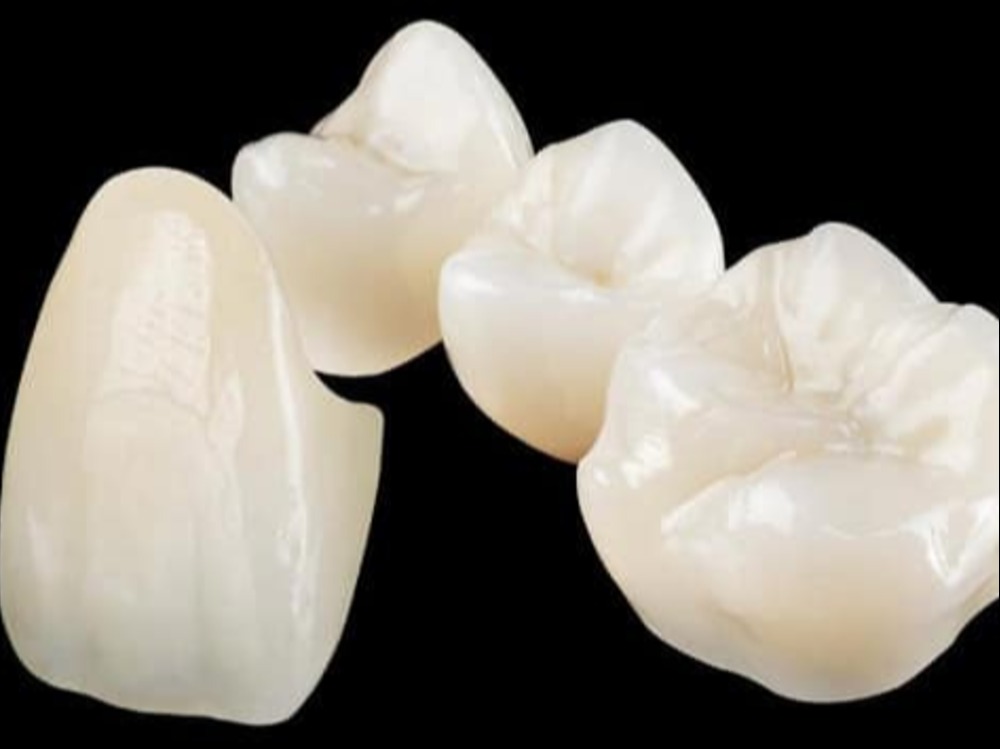
Master-crafted restorations engineered for uncompromising strength, function, and life-like aesthetics.
The Prosthodontic Advantage
When your teeth are damaged, severely worn, or missing, standard dental repairs are often not enough. At Advanced Dentistry of Richmond, our prosthodontic specialists meticulously design custom crowns, onlays, and bridges that seamlessly rebuild your smile. By collaborating exclusively with elite dental laboratories and master ceramists, we ensure that every restoration perfectly mimics the translucency, texture, and strength of natural enamel.
Dental Crowns & Onlays: Restoring Strength and Beauty
When a tooth is compromised by large decay, fractures, or a root canal, it requires structural reinforcement.
Dental Crowns: Often called a “cap,” a crown fully covers the entire visible portion of a tooth at and above the gum line. This restores its original shape, size, and bite alignment while protecting it from further damage.
Dental Onlays: An onlay is a more conservative, partial-coverage restoration. It is used when a tooth is too damaged for a standard filling but still has enough healthy structure that a full crown is not yet necessary.
Premium Materials for a Flawless Result
We do not believe in one-size-fits-all dentistry. We carefully select the specific material that best suits your functional needs and aesthetic goals:
Porcelain & Ceramic (e.Max/Lithium Disilicate): Highly natural-looking and ideal for front teeth. They mimic the light-reflecting properties of natural enamel and blend beautifully with your smile.
Porcelain-Fused-to-Metal (PFM): A proven combination of strength and beauty, featuring a durable metal substructure layered with natural-looking porcelain.
Gold Alloys: The ultimate standard in durability and gentleness on opposing teeth. Gold is highly recommended for posterior (back) teeth, especially for patients with heavy bite forces or bruxism (grinding).
Zirconia: An incredibly advanced, high-strength ceramic that offers exceptional durability without sacrificing aesthetics. This material is typically reserved for specific cases where additional material strength is needed.
The Custom Crown Process
Creating a perfect restoration takes time, precision, and artistry.
Diagnosis & Preparation: We gently prepare the damaged tooth, focusing on biomimetic, tissue-preserving techniques.
Impressions & Temporaries: We take highly accurate impressions and fabricate a custom provisional (temporary) crown so you never leave our Richmond office with a compromised smile.
Laboratory Fabrication: Our master ceramists hand-layer and sculpt your final restoration for an exact, personalized match.
Final Placement: We meticulously verify the fit, margins, and aesthetics before securely bonding your final restoration into place. With proper care, our custom crowns are designed to last 10 to 20 years or more depending on the patient’s habits and preexisting conditions of the tooth.
Custom Dental Bridges: Seamlessly Replacing Missing Teeth
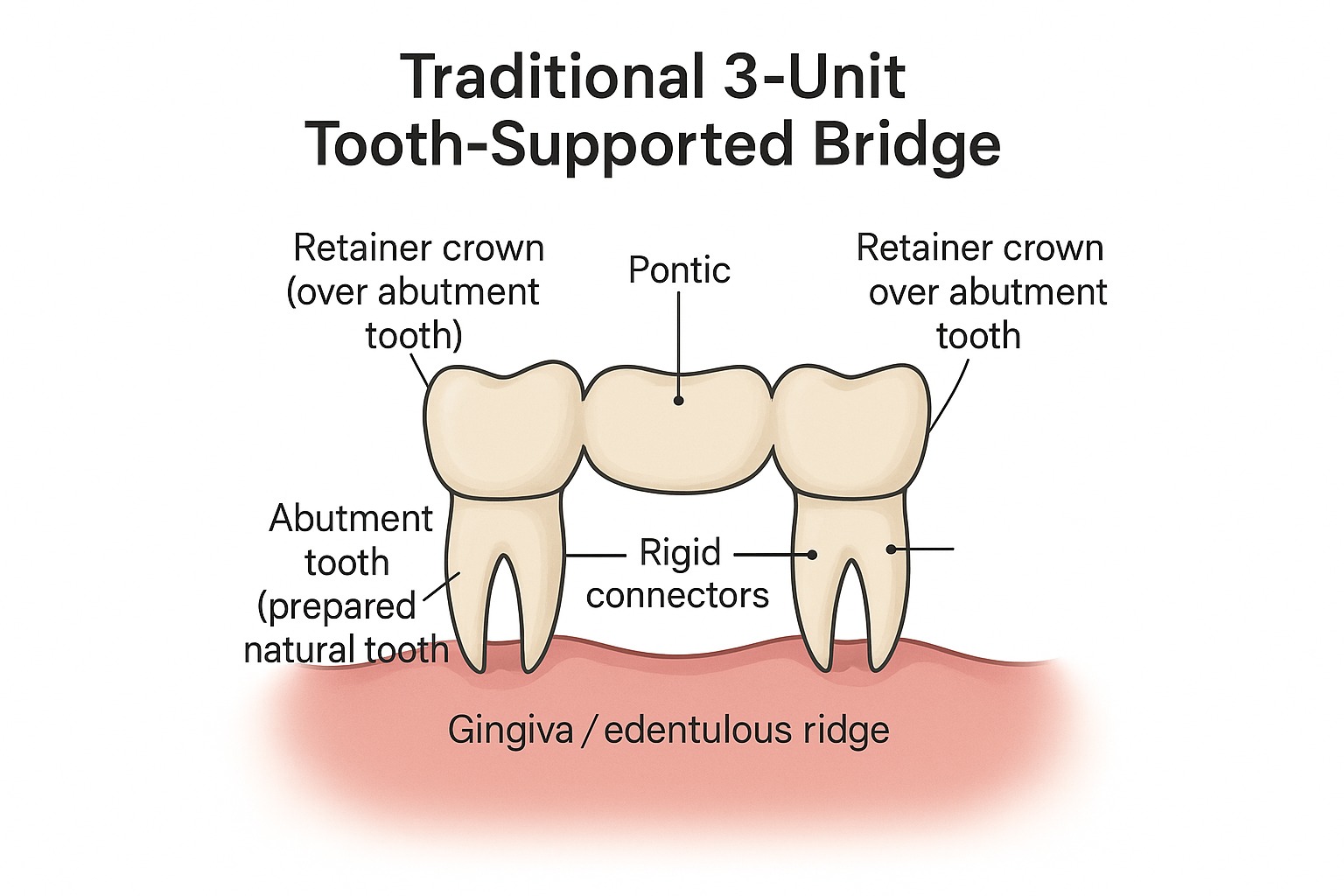
If dental implants are not the right predictable treatment option for you, a custom dental bridge is an excellent, fixed solution. A bridge replaces one or more missing teeth by anchoring a life-like prosthetic tooth (the pontic) to the adjacent natural teeth (the abutments).
Available in ceramic, zirconia, PFM, or gold alloy, our bridges are designed to:
Fill unsightly spaces caused by missing teeth.
Prevent adjacent teeth from shifting out of alignment.
Restore optimal chewing efficiency, speech, and joint balance.
Frequently asked questions
A dental crown is a tooth-shaped “cap”. It is placed over and affixed to a prepared tooth. It covers the tooth to restore its shape, size, strength, and improve its appearance.
Once placed, the crown fully covers the entire visible part of a tooth that lies at and above the gum line.
You may ask yourself “How do I know if I need a dental crown?” Common reasons include:
- Preservation of tooth structure. – for example to preserve structure if small fracture lines are visible)
- Improved tooth function or replacement
- Cosmetic reasons
- After a root canal treatment
These situations are described below.
Crowns are used for tooth preservation
A dental crown may be needed in the following situations:
- To protect a tooth with large fillings or a root canal
- To protect the tooth from further cracking
- To restore severely worn teeth
A crown may also be used as a support or complete tooth replacement mechanism
- To hold a dental bridge in place
- To cover an implant
Crowns are commonly used for cosmetic or functional improvements
- To cover misshaped or severely discolored teeth
- To enhance cosmetic appearance, improve chewing function and even speech
Commonly used types of dental crowns in Virginia
For most people, the best crown is one that cannot be distinguished from a natural tooth.
There are essentially four or five types of crowns commonly offered in most practices.
These include ceramic crowns, porcelain, porcelain fused to high noble metal, Zirconia, stainless steel, and gold. Also, temporary resin crowns are placed while a permanent crown is prepared in the laboratory.
Ceramic, porcelain crowns
All-ceramic or porcelain crowns are excellent at matching the color of natural teeth. They work well for the front teeth as they appear translucent and natural. If the gum recedes over time these crowns will still appear natural at the gum line. They are less durable than PFM crowns as PFM crowns have the underlying structure of the high noble metal. This crown remains intact should at one point the ceramic component of the crown fracture. Porcelain and ceramic crowns are harder than the opposing natural teeth. To prevent unnecessary wear and enable a proper bite, the crown should be cut to precisely fit the contour of the opposing tooth.
Dental PFM crowns
PFM crowns yield a natural appearance and typically last longer than pure porcelain or ceramic crowns. The metal alloy component provides strength and a precision fit to the underlying tooth substrate. Under the high temperature in a ceramic oven, the porcelain or ceramic will be baked onto the metal. PFM crowns have a higher cost for time and materials, yet generally, last longer than their porcelain or ceramic counterparts.
Gold alloy dental crowns
Gold alloy crowns are typically used in less visible parts of the mouth such as the bicuspids or molars. Unlike conventional ceramic or porcelain crowns less tooth substance needs to be excavated to prepare a substrate for a PFM or gold crown. Gold crowns can last more than 50 years and are often prescribed for individuals who grind their teeth (bruxism). The gold crown will wear down the opposing teeth less than a ceramic or porcelain one.
Temporary Crowns
All-resin dental crowns are less expensive than other crown types. However, they are a crafted from a softer material and wear down faster over time. This makes them more prone to fractures than porcelain-fused to high noble-metal-crowns. These crowns are mostly used as a temporary solution before the more permanent restoration is utilized.
Stainless steel crowns are prefabricated crowns that are used on permanent teeth primarily as a temporary measure. The crown protects the tooth or filling while a permanent crown is made from another material.
For children, a stainless steel crown is commonly used to fit over a primary tooth, which has been prepared to accept it. The crown covers the entire tooth and protects it from further decay or fracture. When the primary tooth falls out to make room for the permanent tooth, the crown comes with it. In general, stainless steel crowns are used for children’s teeth because they don’t require multiple dental visits to put in place and are more cost-effective.
Crowns and bridges – How we make them and why it matters to you
We take great care in taking impressions, the selection of crown materials, the the dental laboratories we use and in the final placement and function of the crowns or bridge.
Full Arch Impressions – quality begins here
We always take full-arch impressions. The impression determines the crown-to-tooth fit and the contact to the opposing teeth. A precise fit is essential for strength, comfort, and longevity. It also blocks microbial ingress, where the crown bonds to the tooth. Thus, there is little if any need to adjust the crown at the time of fitting. This assures the optimal placement, strength, adhesion, and seal.
Dental bio-materials – some are better than others
Advanced Dentistry of Richmond uses mostly porcelain fused to high noble metal crowns.
High noble metals, such as platinum/gold alloys are non-allergenic to gums and best protect the tooth from bacteria. Over many years the porcelain portion of the crown may fracture or chip. The tooth remains protected by the underlying gold alloy layer.
We work only with a select group of scrutinizing dental laboratories. They require exact impressions from the patient’s mouth. They do not accept any “guess-work”. Skilled technicians fabricate crowns with the best fit and natural look. This includes custom staining and shaping for optimal esthetic results.
During your first visit, we inspect the tooth and assess the level of decay or need for reconstruction. We will take X-rays to determine the condition of the root and the spread of non-visible decay.
Next, we decide on the best treatment. Considerations include a multi-sided filling, a crown, an inlay, a bridge, or an implant. This depends on the severity of the decay, tooth position, bite, and other factors.
When we select a tooth for a crown preparation, we will trim the tooth surface with a diamond coated drill bit. This preserves as much of the tooth as possible. We will try preserve as much of the natural tooth structure as possible. The preparation will be finalized with a very fine diamond drill. We use a lot of water to cool the tooth during the tooth preparation process, to prevent damaging the underlying tooth nerve.
We might have to build up missing tooth structure with a core build-up, which hardens and improves the fit and adhesion of the new crown.
Oncewe finish preparing the tooth, we take impressions for both the upper and lower arches. These not only capture the contours of the prepared tooth but also that of the opposing tooth to assure a good bite.
Finally, we fit and cement a temporary crown on the tooth. After about two weeks, once the dental laboratory has finished preparing the crown, we will schedule an appointment to fit and cement the permanent crown.
High quality dental laboratories have better trained dental technicians who receive specific instructions on materials to be used and how to shade and shape the new crown. The few dental laboratories we use are thorough and precise. Their crowns have an excellent fit. This saves considerable time for placement. It also provides an excellent seal which allows the dental cement to perfectly adhere to the underlying tooth.
On your second visit, we fit the crown. We check your bite and the contact surfaces to the opposing teeth.
You will have a chance to inspect the new crown. You will have an opportunity to discern how natural it looks and how the color and texture matches the surrounding teeth.
Finally, we cement the new crown to the prepared tooth with a long-lasting dental cement.
A simple porcelain fused to high-noble metal crown placement involves two visits. The interval between visits is about 14 days.