
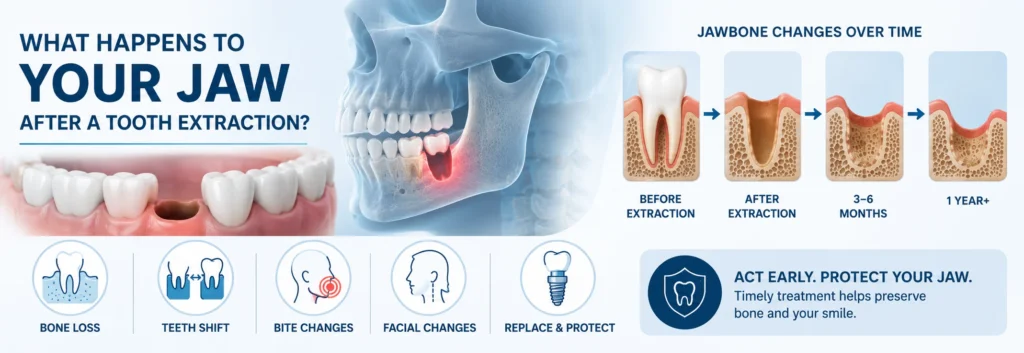
What Happens To Your Jaw After A Tooth Extraction?
Losing a tooth changes more than just the gap you see in the mirror. The bone underneath starts shifting the moment that tooth is gone, and if nothing gets done about it, the effects can spread further than most people expect.
Why The Jaw Reacts The Way It Does
Teeth do more than chew food. Every time you bite down, that pressure travels through the tooth root and into the jawbone, which keeps the bone dense and stimulated. Once a tooth is removed, that stimulation disappears entirely in that spot.
Without that pressure, the body treats the area as no longer needed and starts breaking down the bone that used to support the tooth. This process, known as bone resorption, begins surprisingly fast after extraction. Many patients are surprised to learn just how quickly this starts, often within the first few weeks rather than months.
The Timeline Of Changes After Extraction
Tooth extraction in Richmond VA follows a fairly predictable pattern, even though healing speed varies from person to person. Bone loss is most rapid in the first few months, then slows down but continues gradually over time if nothing replaces the missing tooth.
Within the first year alone, a noticeable amount of bone width and height can be lost in that area. This is not just a cosmetic concern, since it affects the surrounding teeth and jaw structure too. The changes tend to be gradual enough that patients do not notice them day to day, which is part of why the long-term impact often catches people off guard.
Common Effects On The Jaw And Surrounding Teeth
A few specific changes tend to show up after extraction, especially when the space is left empty for an extended period. These effects tend to build on each other over time.
- Narrowing of the jawbone in the extraction site
- Nearby teeth are gradually shifting into the empty space
- Changes to bite alignment as teeth move
- Sunken facial appearance if multiple teeth are affected
- Increased strain on remaining teeth from shifted bite forces
- Difficulty fitting a future implant if bone loss becomes severe
How This Affects Chewing And Bite Function
As nearby teeth drift and bone changes shape, chewing patterns often shift without the person realizing it right away. This can lead to uneven wear on other teeth, jaw discomfort, and sometimes headaches from the added strain.
The longer the space stays empty, the more these changes tend to compound, which is part of why dentists usually recommend addressing the gap sooner rather than later. A single missing tooth might not seem like a big deal at first, but the ripple effect on neighboring and opposing teeth can turn one problem into several over time.
Why Bone Preservation Gets Discussed Right Away
Many dentists talk about bone grafting or preservation techniques immediately after extraction, even before deciding on a permanent replacement option. This step helps maintain the bone’s shape and volume, which matters a lot if an implant is being considered down the road.
Skipping this step does not always cause problems, but it does reduce options later if bone loss becomes significant enough to complicate future treatment. A small graft placed right after extraction is often far simpler and less invasive than trying to rebuild significant bone loss years later.
Replacement Options And How They Affect the Jaw
Different replacement options interact with the jawbone in different ways. Implants, for example, restore the pressure and stimulation a natural tooth root once provided, which helps slow or stop further bone loss in that area.
Bridges and dentures do not provide that same stimulation, since they sit on top of the gum or attach to neighboring teeth rather than integrating into the bone itself. This does not make them wrong choices, but it is worth knowing how each option affects long-term jaw health differently. Patients choosing between these options should factor in not just cost and appearance, but how each choice will affect bone stability for years to come.
What To Expect During Healing
Initial healing after an extraction usually takes one to two weeks for soft tissue, though the bone underneath continues remodeling for months afterward. Swelling and discomfort generally improve within the first few days with proper care.
Following aftercare instructions closely during this period genuinely affects how well the site heals and how ready it may be for future treatment like an implant. Skipping basic aftercare steps, like avoiding certain foods or missing follow-up appointments, can slow healing and complicate whatever comes next.
Signs The Jaw May Be Changing More Than Expected
Some patients notice specific signs that bone loss or shifting is progressing faster than typical. These are worth mentioning at a follow-up visit rather than waiting until the next scheduled checkup.
Gaps forming between other teeth, a bite that suddenly feels different, or visible changes in facial contour near the extraction site are all reasons to check in sooner. Catching these changes early usually means simpler solutions than waiting until the shift has fully settled in.
Getting The Right Guidance Early
Anyone dealing with an extraction should talk through replacement timing with their dentist Richmond VA relies on for this kind of care, ideally before the procedure even happens. Planning ahead gives more flexibility with options than waiting until bone loss has already progressed.
Every situation is a little different, so the right timeline and replacement option depend on individual healing, bone quality, and overall dental history. A conversation before the extraction, rather than after, often leads to a smoother path toward whatever replacement option ends up being the right fit.
Looking Ahead After Extraction
The jaw does not stay the same after a tooth is removed, and pretending otherwise tends to lead to bigger problems later. Addressing the gap early, whether through an implant, bridge, or other option, protects both function and long-term jaw health.
Frequently Asked Questions
How soon should a tooth be replaced after extraction?
Many dentists recommend discussing replacement options within a few months of extraction, since bone loss accelerates early on and can limit certain choices later.
Does bone loss happen even with a single missing tooth?
Yes, bone loss can occur even from one missing tooth, though the visible impact is usually more noticeable when multiple teeth in the same area are affected.
Can bone loss after extraction be reversed?
Bone grafting can rebuild some lost volume in many cases, though prevention right after extraction is generally more effective than trying to restore bone later.