
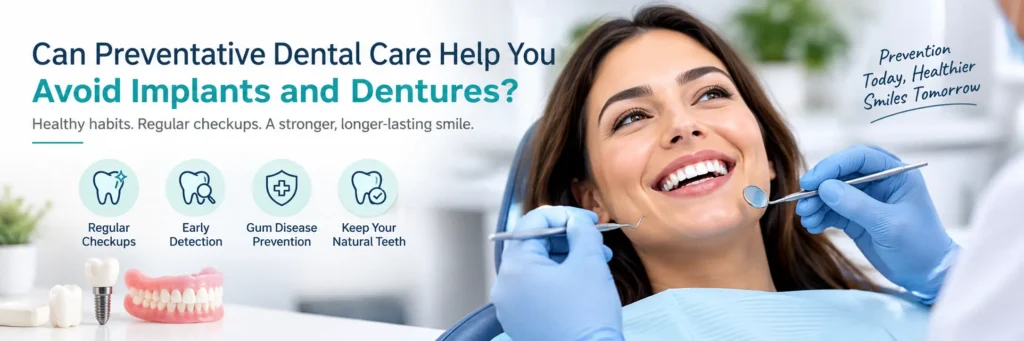
Can Preventative Dental Care Help You Avoid Implants and Dentures?
Few people plan to lose a tooth, and most are surprised to learn how gradual the process usually is. Teeth rarely fail overnight, because the conditions behind tooth loss tend to build quietly over months and years while symptoms stay mild or even absent. That slow pace is exactly why steady professional care can change the outcome.
In this article, we walk through how tooth loss develops, what a thorough prevention visit actually covers, and where implants and dentures still belong in the conversation. The goal is to give you an honest picture rather than a rosy one, because the truth is far more useful than hype.
Many adults only discover the value of a preventative dentist after a problem has already become painful or costly. Regular exams, cleanings, and honest guidance catch most issues while they are still small and inexpensive to fix. Over a lifetime, that habit can be the difference between keeping your natural teeth and needing replacements.
How Tooth Loss Develops
Gum Disease and Its Stages
Gum disease starts as gingivitis, with red, swollen gums that bleed when you brush or floss. Left alone, it can move into periodontitis, where the bone holding your teeth in place is slowly destroyed. The early stage can be reversed, while the later stage can be controlled but never fully undone.
Because it rarely hurts, many people dismiss the bleeding as a sign they brushed too hard. That assumption is one of the most common reasons gum disease goes unchecked for years.
Decay Over Time
Cavities begin as tiny areas of softened enamel that you cannot feel. Without attention they reach the inner layers of the tooth, where infection and pain eventually show up. A small filling at the right moment can prevent a root canal or an extraction years down the road.
Grinding, Cracks, and Wear
Clenching and grinding wear enamel flat and can crack teeth, especially those carrying large old fillings. These problems are often painless until a tooth finally breaks, which is why a routine exam is the best place to catch them.
What Happens at a Preventative Visit
The Examination
Your dentist checks each tooth for decay, wear, and cracks, then evaluates the gums and screens the soft tissues of the mouth. The way your upper and lower teeth meet is also assessed, since a poor bite quietly damages teeth over time.
The Professional Cleaning
Hardened plaque, known as tartar, cannot be brushed away and tends to collect in spots that are hard to reach. A professional cleaning removes it and gives your gums a fresh start. Many patients notice that their mouth feels calmer and healthier afterward.
Imaging and Records
X-rays reveal cavities between teeth and bone changes that cannot be seen directly. Records from earlier visits then show how your mouth is shifting from year to year. Comparing them helps your dentist spot trends before they turn into problems.
What a Good Visit Gives You
- Exams that identify problems before they cause symptoms
- Cleanings that control the bacteria linked to gum disease
- Imaging that shows hidden decay and bone changes
- Customized advice on home care, diet, and protective devices
Prevention for Higher-Risk Patients
Some patients face a greater chance of tooth loss and need a more tailored plan. Dry mouth conditions such as Sjogren’s syndrome reduce the protective effect of saliva and raise cavity risk, so they often call for fluoride products and closer monitoring.
Sleep apnea, heavy grinding, and certain medications can also affect your teeth and gums. A dentist who looks at the whole person can adjust the plan instead of treating each symptom in isolation.
Daily Habits That Protect Your Teeth
- Brush twice daily with fluoride toothpaste for about two minutes
- Clean between your teeth every day with floss or interdental brushes
- Limit sugary snacks and drinks, especially between meals
- Avoid tobacco in every form because it harms the gums and slows healing
- Wear a custom night guard if you grind or clench
None of this is complicated, but consistency matters far more than perfection. A routine you can keep for decades will do more for you than an elaborate one you abandon after a month.
Where Implants and Dentures Still Fit
Prevention improves your odds, but it does not remove the chance that a tooth will eventually need replacing. Injury, advanced infection, and long-standing damage can all lead to extraction even in patients who take excellent care.
When that happens, implants, bridges, and dentures can restore chewing and appearance. Planning them carefully, ideally with a prosthodontist, protects the surrounding teeth and the bone underneath. Implants are widely regarded as the gold standard for replacing missing teeth, while custom dentures remain a sound choice for many patients.
A Whole-Patient Perspective
Oral health is connected to the rest of the body, and conditions such as diabetes, dry mouth, and sleep disorders can all influence the gums and teeth. A holistic approach considers your medical history, medications, and lifestyle alongside what shows up in the mouth.
This wider view often reveals risk factors that a purely mechanical exam would miss. It also makes for better conversations, because your dentist knows what you are actually dealing with day to day.
Choosing the Right Practice
When comparing dentists in Richmond for long-term care, look for a team that explains findings clearly, tailors the visit schedule to your risk, and can handle more complex needs if they arise. A practice that offers both prevention and advanced restorative treatment can coordinate your care without passing you from office to office.
Questions Worth Asking
A few direct questions can show you quickly whether a practice is the right fit for the long run:
- How do you assess gum health at each visit?
- How often will I need to come in, given my own risk level?
- Do you screen for grinding, dry mouth, and bite problems?
- What happens if I eventually need an implant or a denture?
A confident answer that is specific to you is a better sign than a polished sales pitch. Good clinicians are happy to explain their reasoning and to put your long-term health ahead of speed.
Why Patients Choose Advanced Dentistry of Richmond
Advanced Dentistry of Richmond is a women-owned prosthodontic practice that combines preventative care with implants, dentures, veneers, crowns, and reconstructive treatment. Dr. Ursula Klostermyer, DDS, PhD, leads the team alongside Dr. Clara Bergeron, DDS, MS, and Dr. Franziska Klostermyer, DMD, MS. The practice also offers holistic dentistry and care for specialized conditions such as sleep apnea, Sjogren’s syndrome, and ectodermal dysplasia. Patients begin with a private consultation where goals and concerns come first.
Frequently Asked Questions
How often should I visit for preventative care?
Every six months is the common recommendation, though patients with gum disease or higher cavity risk may need visits more often. Your dentist will set a schedule that matches your health.
Can early gum disease really be reversed?
Gingivitis is usually reversible with professional cleaning and consistent home care. Early attention makes a real difference. Once bone loss has occurred, the goal shifts to controlling the disease and preventing further damage.
Will preventative care guarantee I never need dentures?
No treatment can promise that, but consistent care greatly lowers the likelihood of losing teeth. Many people keep their natural teeth for life with regular attention.
Are night guards part of prevention?
Yes, because they protect teeth from the wear and cracking caused by grinding and clenching. A custom guard fits better and is generally more comfortable than a store-bought version.
What if I have already lost some teeth?
Prevention is still worthwhile because it protects the remaining teeth and any replacements you receive. A prosthodontist can plan replacement options that fit with your long-term care.