
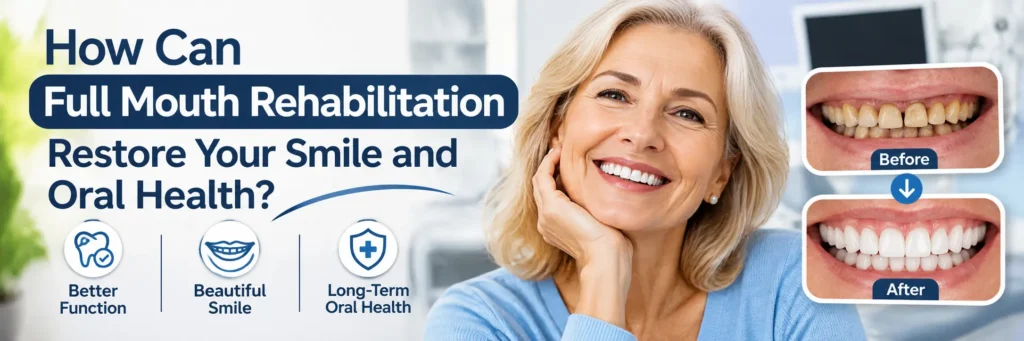
How Can Full Mouth Rehabilitation Restore Your Smile and Oral Health?
Have you been dealing with several dental problems at once? Maybe you have missing teeth, worn-down enamel, broken crowns, or discomfort when chewing. These issues can affect more than your smile. They can make everyday activities feel difficult and leave you unsure about your dental health.
Full mouth rehabilitation offers a comprehensive way to address multiple concerns through a carefully planned combination of dental treatments. Instead of treating each problem separately, this approach considers your teeth, gums, bite, and overall oral health.
At Advanced Dentistry of Richmond, we focus on restoring the function and appearance of your smile with personalized prosthodontic care. Let’s explore how full mouth rehabilitation works, who may benefit from it, and what you can expect throughout the process.
What Is Full Mouth Rehabilitation?
First of all, Full mouth rehabilitation is a comprehensive dental treatment that restores the health, function, and appearance of your entire mouth. It may involve rebuilding or replacing several teeth, depending on your individual needs.
The treatment focuses on more than cosmetic improvements. It also addresses the underlying problems affecting your ability to chew, speak, and maintain a healthy bite.
For example, you may have several damaged teeth and an uneven bite. Treating only the visible damage may not resolve the underlying issue. A full mouth rehabilitation plan considers how each tooth works with the others.
The goal is to create a healthy, comfortable, and natural-looking smile that supports your everyday life.
When Should You Consider Full Mouth Rehabilitation?
You may not need extensive dental treatment for a single chipped tooth or a small cavity. However, when multiple concerns affect your oral health, a comprehensive approach may be more appropriate.
You may benefit from full mouth rehabilitation if you:
- Have several missing, fractured, or severely damaged teeth.
- Experience significant tooth wear from long-term grinding.
- Have difficulty chewing because of an uneven or uncomfortable bite.
- Experience jaw discomfort associated with bite problems.
- Have older crowns, bridges, or fillings that are failing.
- Need a combination of restorative and cosmetic dental treatments.
These concerns can develop over time. Tooth decay, gum disease, trauma, and chronic grinding may all contribute to extensive dental damage.
A comprehensive examination helps us understand the condition of your teeth and determine whether full mouth rehabilitation is suitable for you.
How Does Full Mouth Rehabilitation Improve Oral Health?
Restoring your smile involves more than replacing damaged teeth. The treatment must also support the structures that help your mouth function properly.
Restore Your Ability to Chew Comfortably
Missing or damaged teeth can make chewing difficult. You may find yourself avoiding certain foods or relying on one side of your mouth.
Rebuilding damaged teeth and replacing missing ones can help improve chewing function. A properly planned bite also distributes pressure more evenly across your teeth.
This can make eating more comfortable and help you enjoy a wider variety of foods.
Protect Your Remaining Natural Teeth
When teeth are damaged or missing, the surrounding teeth may experience additional pressure. This can contribute to uneven wear and other complications.
Full mouth rehabilitation addresses these concerns through appropriate restorations. Depending on your condition, treatment may involve crowns, bridges, implants, or other dental procedures.
Our priority is to preserve your natural teeth whenever possible. Restorations are selected according to the condition of your teeth and the long-term needs of your smile.
Improve Your Smile’s Appearance
Extensive dental damage can affect the shape, color, and alignment of your teeth. Missing teeth may also change the appearance of your smile.
Full mouth rehabilitation can improve these concerns through carefully designed restorations. Porcelain veneers, crowns, and other treatments may help create a more balanced appearance.
The goal is not to make your smile look artificial. It is to restore a natural appearance that complements your facial features.
What Treatments May Be Included in Full Mouth Rehabilitation?
Every smile has different needs. Your treatment plan may include one procedure or several treatments working together.
Here are some common options.
Dental Crowns and Bridges
Crowns cover damaged teeth to restore their strength, shape, and appearance. They may be recommended when a tooth has extensive damage that cannot be managed with a simple filling.
Bridges replace one or more missing teeth by supporting artificial teeth between existing teeth or other suitable structures.
Both treatments can help restore chewing function and improve the appearance of your smile.
Dental Implants
Dental implants provide a foundation for replacing missing teeth. They are placed in the jawbone and can support individual crowns, bridges, or larger restorations.
Implants may be considered when missing teeth affect your ability to chew or maintain a stable bite.
Your bone health, gum condition, and overall dental needs help determine whether implants are appropriate.
Porcelain Veneers
Veneers are thin restorations placed over the front surfaces of teeth. They can improve the appearance of teeth affected by discoloration, uneven shapes, or certain cosmetic concerns.
When included in full mouth rehabilitation, veneers must work with the overall bite and restorative plan.
Fillings, Bonding, and Other Treatments
Smaller areas of damage may be treated with fillings or bonding. Root canal treatment may also be needed to address infection or damage inside a tooth.
In some cases, orthodontic treatment can help improve tooth alignment before restorative procedures begin.
We select treatments based on your clinical needs rather than using the same combination for every patient.
What Happens During the Full Mouth Rehabilitation Process?
A successful outcome depends on careful planning. Full mouth rehabilitation often involves several appointments, with each stage preparing your mouth for the next.
Step 1. Comprehensive Examination and Planning
We begin by examining your teeth, gums, bite, and jaw joints. We also review your dental history and discuss the concerns affecting your daily life.
Advanced imaging and diagnostic tools help us assess the structures of your mouth. This information allows us to develop a treatment plan that considers both function and appearance.
Step 2. Address Existing Dental Problems
Before placing final restorations, we need to establish a healthy foundation.
This may involve treating gum disease, managing tooth decay, performing root canal treatment, or addressing teeth that cannot be preserved.
Healthy gums and supporting structures are essential for the long-term success of your restorations.
Step 3. Place Temporary Restorations
Depending on your treatment, temporary restorations may be placed while your permanent teeth are being prepared.
These provisional restorations allow you to experience your planned bite and smile. They also give us an opportunity to evaluate comfort, function, and appearance before completing the final work.
Step 4. Complete Your Final Restorations
Once the treatment plan has been evaluated and finalized, your permanent restorations are placed.
We carefully assess their fit, appearance, and function. Adjustments may be made to ensure that your bite feels comfortable and your restorations work together.
Step 5. Maintain Your Restored Smile
Your treatment does not end when your restorations are placed.
Regular dental visits, good oral hygiene, and appropriate maintenance help protect your teeth and restorations. If you grind your teeth, a protective appliance may also be recommended.
Your maintenance needs will depend on the type of treatment you receive.
How Long Does Full Mouth Rehabilitation Take?
The timeline depends on the complexity of your dental concerns and the treatments involved.
Some patients may need only a few appointments. Others may require several months to complete their rehabilitation.
Procedures such as dental implants may involve additional healing time before the final restoration can be placed. Gum treatment, temporary restorations, and other procedures can also affect the overall schedule.
We explain the expected stages and timeline during your consultation. This helps you understand what to expect and plan your appointments accordingly.
Why Choose Us for Full Mouth Rehabilitation in Richmond, VA?
When you need extensive dental treatment, choosing the right team matters. You deserve care that considers your oral health, comfort, and long-term goals.
At Advanced Dentistry of Richmond, we specialize in complex prosthodontic care. Our advanced training focuses on restoring damaged teeth, replacing missing teeth, and rebuilding comfortable, functional bites.
We take the time to understand your concerns and develop a treatment plan tailored to your needs. Our approach combines careful diagnostics, personalized planning, and attention to the details that influence the final result.
We also recognize that full mouth rehabilitation is a significant decision. We guide you through each stage, explain your treatment options, and help you understand the purpose of every procedure.
Whether you need to restore worn teeth, replace missing teeth, or address several dental concerns together, our team is here to help you make informed decisions about your smile.
Take the First Step Toward a Healthier Smile
Are damaged, worn, or missing teeth affecting your everyday life? You do not have to manage these concerns alone.
Contact Advanced Dentistry of Richmond to schedule a consultation. We will evaluate your dental needs, discuss your goals, and help you understand whether full mouth rehabilitation is the right option for you.
Call us at (804) 282-7260 or visit our Richmond office to get started.
Frequently Asked Questions
1. Is full mouth rehabilitation the same as a smile makeover?
No. A smile makeover mainly focuses on improving the appearance of your teeth. Full mouth rehabilitation addresses oral health, chewing function, bite problems, and aesthetics. It may include cosmetic treatments, but its primary goal is comprehensive restoration.
2. Is full mouth rehabilitation painful?
Your comfort is an important part of treatment. Local anesthesia and other appropriate techniques may be used during procedures. You may experience some temporary soreness or sensitivity afterward, depending on the treatments performed. Your dentist will explain what to expect.
3. Can full mouth rehabilitation save my natural teeth?
In many cases, yes. Treatment may involve repairing damaged teeth with crowns, fillings, or other restorations. However, teeth that are severely damaged or cannot be restored may need to be replaced. The decision depends on your individual dental condition.
4. How long do full mouth rehabilitation results last?
The longevity of your results depends on the treatments involved, the condition of your oral health, and how well you maintain your teeth and restorations. Regular dental visits, proper brushing and flossing, and following your maintenance plan can help protect your results.
5. Who is a good candidate for full mouth rehabilitation?
People with multiple missing, damaged, or severely worn teeth may be suitable candidates. Those with failing restorations or significant bite problems may also benefit. A comprehensive dental examination is necessary to determine the right treatment approach for your needs.