
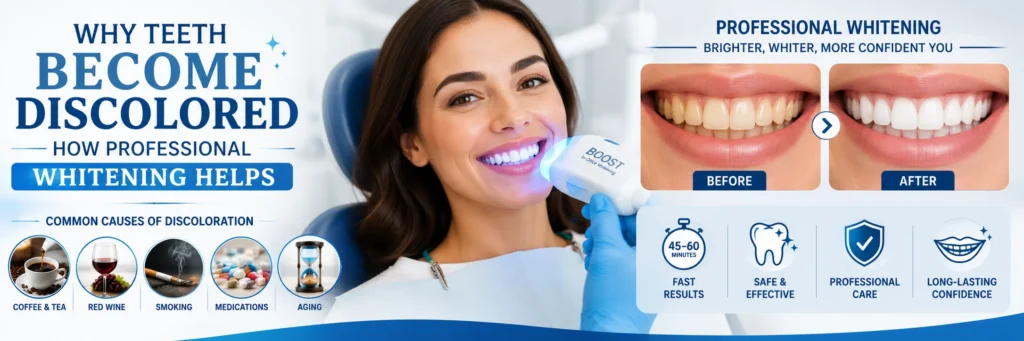
Why Teeth Become Discolored: How Professional Whitening Helps
Ever caught your reflection in a photo and thought your teeth looked a little duller than you remembered? You are definitely not imagining it. Teeth naturally shift in color over the years, sometimes gradually enough that you barely notice until you compare an old picture to a recent one.
The good news is that discoloration is one of the most fixable cosmetic concerns out there, and professional whitening can often turn things around in a single visit. Before jumping into the fix, though, it helps to understand why teeth discolor in the first place, since not all staining happens for the same reason, and that actually affects what kind of results you can expect.
What Foods And Drinks Cause Teeth To Stain?
Coffee is probably the biggest culprit for most people, closely followed by tea, red wine, and dark sodas. These all contain compounds called chromogens, which cling to the outer layer of your enamel over time.
Even foods like berries, tomato sauce, and soy sauce can contribute, since dark pigments naturally latch onto tooth surfaces with repeated exposure. it is not usually one cup of coffee that does it, it is years of daily habits adding up gradually. The frustrating part is that these stains build slowly enough that most people do not notice until the change is pretty obvious to everyone else.
How Does Professional In-Office Whitening Work?
At Advanced Dentistry of Richmond, we use the BOOST In-Office teeth whitening Richmond, which relies on a 40% hydrogen peroxide gel applied directly to your teeth. Unlike some systems, this one does not require a UV or LED light to activate the whitening process, which some studies suggest can actually generate unnecessary heat without improving results.
The entire treatment takes somewhere between 45 and 60 minutes, and patients typically walk out seeing a noticeable difference immediately, no waiting days or weeks to see if it worked. This makes it a practical option for anyone wanting fast, visible results without a long commitment.
What Are Some Other Causes That Lead To Teeth Stains?
Here are a few more causes mentioned, ranging from the choice of things we consume to natural behaviors of teeth:
Smoking:
Yes, and often more dramatically than food or drink alone. Tobacco contains tar and nicotine. Both of which are notorious for creating stubborn yellow-brown stains that sink into enamel over time. Unlike surface stains from coffee or wine, tobacco staining tends to penetrate deeper.
This makes it harder to remove with regular brushing or basic whitening products. Smokers often see staining reappear faster after whitening too. Simply because the habit continues working against the results. This does not mean whitening will not work. It just means expectations and maintenance routines usually need to be adjusted accordingly for long-term results to actually stick.
The Role of Aging:
Enamel naturally wears down over the decades. And, as it thins, the yellowish dentin layer underneath becomes more visible through it. This is a completely normal part of aging, not a sign that something is wrong, but it does mean teeth tend to look progressively more yellow as people get older, even with excellent oral hygiene.
On top of that, decades of exposure to staining foods and drinks compound the effect, layering discoloration on top of what is already a naturally shifting tooth color. This combination is exactly why whitening tends to become more relevant to people as they move into their 40s, 50s, and beyond.
Medications:
Certain medications, tetracycline antibiotics being a well-known example, can cause discoloration that develops from the inside of the tooth rather than the surface. This type of staining often happens when medications are taken during childhood while teeth are still developing, though some medications can affect adult teeth as well. Other drugs, including certain antihistamines and blood pressure medications, have also been linked to changes in tooth color over long-term use.
Because this kind of staining sits deeper within the tooth structure, it usually responds differently to whitening treatments compared to surface stains, and results can vary quite a bit from person to person.
There are other causes, like consumption of sugary drinks or pollution and more that lead to staining of teeth.
Whitening vs. Bleaching: What Is the Difference?
A lot of people use “whitening” and “bleaching” like they mean the same thing, but there is actually a real distinction between them, and it is worth knowing. Per FDA guidelines, whitening technically means bringing a tooth back to its natural color by clearing away surface stains and buildup. Bleaching goes a step further, pushing the tooth past its original shade entirely. That is actually the reason products containing bleach get regulated as drugs instead of cosmetics.
Here is the thing though: most professional treatments, including the in-office option we use, technically count as bleaching, not whitening, since they take your teeth lighter than their natural starting point. Knowing this upfront just helps you go in with realistic expectations about how dramatic your results are actually going to be.
Is Everyone A Good Candidate For Teeth Whitening?
Not necessarily, and that is an important thing to know before booking a whitening appointment anywhere. Active cavities need to be treated first, since whitening gel can seep into decayed areas and cause discomfort or further damage.
Gum disease and exposed tooth roots are also reasons whitening might not be recommended right away, as these conditions can make teeth significantly more sensitive to the whitening process. Patients with a history of severe tooth sensitivity should have a conversation with their dentist beforehand too. A quick evaluation upfront helps avoid unnecessary pain and ensures you are actually a good fit for the treatment.
How Can You Maintain Your Whitening Results?
Whitening results are not permanent, but a few simple habits can help them last considerably longer. Cutting back on staining foods and drinks, or at least rinsing your mouth afterward, makes a real difference over time.
Using a straw for coffee, tea, or dark sodas helps limit direct contact with your front teeth. Avoiding tobacco products entirely is probably the single biggest factor in maintaining results, since smoking tends to undo whitening faster than almost anything else. Scheduling periodic touch-up treatments also helps keep your smile looking fresh without needing a full treatment every time.
Why Choose Advanced Dentistry Of Richmond
Discoloration happens for a lot of different reasons, and getting the right treatment starts with understanding what is actually causing yours. At Advanced Dentistry of Richmond, our best dentist in Richmond evaluates your oral health first to make sure whitening is the right fit, then uses the BOOST In-Office System to deliver fast, noticeable results in under an hour. Our approach focuses on both safety and results, so you leave with a brighter smile and confidence that it was done the right way.
Ready to see what professional whitening can do for your smile? Schedule your appointment with Advanced Dentistry of Richmond today.
Frequently Asked Questions
How long does it take to see results from professional whitening?
Most patients notice a visible difference immediately after their treatment. In-office whitening works faster than at-home kits. The entire process typically takes between 45 and 60 minutes from start to finish.
Will whitening work on all types of tooth discoloration?
Not always. Surface stains from food, drinks, or smoking usually respond well. But discoloration caused by certain medications or internal tooth changes may need a different approach entirely for best results.
How long do professional whitening results typically last?
Results vary depending on habits, but many patients enjoy noticeably whiter teeth for several months to a year. Limiting staining foods, avoiding tobacco, and scheduling occasional touch-ups all help extend those results.